You’re the one who brought up the “big issues”. I merely commented on the general mood of the people. You tried to move the goal post 2 times, both denied, and then decided that you don’t need the other party in this conversation to decide what it will be about. At least you seem to have reached a conclusion, glad that went well in that conversation.
1 Like
We all know votes mean little. I can find some votes too.


US must be so isolated. This is why indeed it’s better to look at sanctions map. Although the one I posted isn’t the sanctions map. It’s just a general map of “world community”.
1 Like
My bad. It’s quite a good approximation, though:

I can’t find a more recent map, but South-Korea, Taiwan and Singapore seem to be the only ones that should be added.
 knocks
  out of
 qualifiers
4 Likes
1 Like
I don’t think there was any confusion between Russia and Russians here.
You were saying “It will take time for the West to regain the trust of Russians”. The converse is that "it will take time for Russia to regain the trust of Westerners (and Japanese/Koreans). @Vsotvep’s point was simply that the latter was probably a bigger problem.
You can disagree of course, or just not care about this second statement, but I wanted to insist that nobody was conflating Russia and Russians.
8 Likes
But if that’s the case then the conversation is just jumping topics without addressing the ones already proposed. Or maybe you could classify it as a monologue, if only it wasn’t designed so as to appear as interacting with someone else.
Oh you don’t like pickles in your sandwich? Actually there are kids starving to death in africa, which is a bigger problem. But of course keep talking about the pickles.
Who even willingly engages in this pointless polemics. I thought you lot are hardcore against whataboutism here. Or is it only a defense when called a hypocrite.
1 Like
I made one remark about the reverse of what you mentioned, all of the following conversation has been about you telling me that I’m meaning something different than what I meant, and me clarifying that I meant what I meant.
The one engaging here is you, I’d happily have left it at one sentence, were it not for the accusation that I somehow couldn’t tell the difference between a country and its inhabitants.
There’s a difference between jumping from “not liking pickles” to “people starve in Africa”, which seems nonsensical, and from “West losing Russians’ trust” to “Russia losing Westener’s trust”, which are simply dual.
4 Likes
You standing by your words doesn’t make it look less like you were trying to derail it into another topic. I guess the absurdity of me talking about X and you using counter arguments to X as if I meant Y is not as obvious as I thought it would be. Next time I’ll bring crayons and make it blatantly clear instead of trying to converse like a boring adult.
And we’ve arrived at the ad hominem stage.
Honestly this is a pathetic conversation.
1 Like
You really had to stretch the definition of ad hominem that far lmao. Definitely a pathetic conversation. I regret saying anything in this thread again. What a delusional echo chamber.
What should really frighten people in the EU, is that this is all being done while waving the flag of “higher ideals” … I didn’t know that descrimination based on place of birth was a “high ideal”, but I live and learn.
Sanctioning the country of Russia is one thing and very much within reason, because anyone would agree that an economic war is a legitimate part of any war, but sanctioning people that were born there, but live here now has nothing to do with any war or any upholding of ethical values.
Next thing you know, you are renaming a classroom named after a GERMAN to spite the Russians 
But seriously, who here wants to be responsible for their governments, even if they voted for them? You will, very reasonably claim that “this is not the platform I voted for, they deceived me, that is not what I voted for”.
Now imagine being held accountable (not merely responsible), for a government of a country you do not even live there any more, nor have you ever voted for.
Does that sound fair? If so, do try to think “why?”
Sure, a lot of people live in countries that think “hey, we are not going to do anything wrong”, but if history has taught us anything is that it is very easy to fall “on the wrong side of history”. The purpose of the high ideal of non-discrimination was to remove the concepts of sides, but we gave up on it. The least we can do is not pretend that it was good thing to do.
Ideals are valuable for the rainy days. That is when they are tested and that is where they are needed. Anyone can have “high ideals” on a sunny day.
We both need each other. That was the ideal, the “one world policy”, the concept that we should all care about the planet and climate change because we are all the same boat, the same people, the same species, the same planet.
We either stick to the hard to achive high ideals or next thing you know you will hear people saying “the world doesn’t need Greece or Belgium or Lesotho” … they were saying similar things when they wanted to kick the “PIIGS” out of the EU.
Seems like a distant past, but this “we are all together, until you are on your own” policy was barely a few years ago.
The accordion world (expand and contract according to the current tune) is not going to work long-term because it really is one planet.
You mean Romanians.
Our Prime Minister said that there was an appauling war in Romania and I believe our Prime Minister.
That’s how much they care 
2 Likes
So you were talking about crayons in a literal sense, not as an attempt to insult?
Unless an echo chamber can be delusional without its members, I don’t see how that isn’t an insult either.
1 Like
I wonder if any of the countries actually care with the sanctions and all that. I have a sneaking suspicious that it has nothing to do with morals and it’s merely a part of their geopolitical games. And we’re arguing here whether it’s right or wrong when it has nothing to do with rights and wrongs.
What happened to owning things?
1 Like
Indeed! Ownership is gradually disappearing, consistent with the tenets of Communism.
1 Like
Government never has to do with right and wrong. Again Sir Humphrey is eloquent on that:

Testament on how amazingly well-thought that script was and still is, is the fact that both arguments seem to have very valid points. 
Yes and no, to keep up with the “Humphrey talk” … individual ownership is what is evaporating, the companies in fact retain full ownership of things, even if you, in fact, buy them in the “traditional sense” of the term.
They are turned into subscription services where you no longer “acquire” a product, but you “unlock” it, for use, as long as it is provided by the company (which can, of course, ban you from using it, even after you’ve paid for it, for any reason whatsoever, and the ToS clearly says so  )
)
A great training ground for those ideas was, alas, gaming, with all those unlockables, cosmetic skins and silly fluff which the companies sold and then resold next year once the put out their new part of their “series” ( EA Sports is a brilliant example of milking its fanbase ) and they can alter, butcher or outright
destroy and cancel what you bought at any point.
I remember Riot Games “reworking” one of their champions, Taric. Noone asked for that, but they did it anyway. In the process, they “remade” (in my opinion, destroyed) the skillset and the skins of the champion. Incidentaly the only skin my cheap broke wallet had ever bought. I complained about it in their support and they told me that they could do nothing about it. Alas the ToS is very clear about such things, I bought “thin air” that belongs to them and I have no rights to the content I actually paid for. Even my account, which I’ve “had” for more than a decade, “belongs to the company” 
Turning the market towards offering commodities that you pay for, but you do not really buy?
Being so unwilling to part with the ownership of something is hardly “communist” and I am fairly certain that the communist manifesto had no such tricks in the fine print. It took the marketing departments more than a hundred years to work and test them out, after all … so credit where credit is due
1 Like
I agree. I didn’t specify “individual” because I thought the context from the previous post was obvious. My view of Communism is not limited by a 19th-century text. Yes, big corporations and their partners, the government, retain ownership because it is a form of control, which is their object. The U.S. is hurtling with incredible speed toward a tyrannical, oligarchic-government system that resembles Russia. Gradually dissolving individual ownership contributes to that trend.
Sidelight: The great SF writer, John Christopher (Sam Youd), almost uniquely envisioned a future controlled by corporate oligarchs in a series of novelettes in the early 1950s, collected in The Twenty-Second Century (1954), unfortunately a fairly rare book.
4 Likes
I was watching this the other day and, since this is the topic, it is really amazing that this happens over there in 2022:
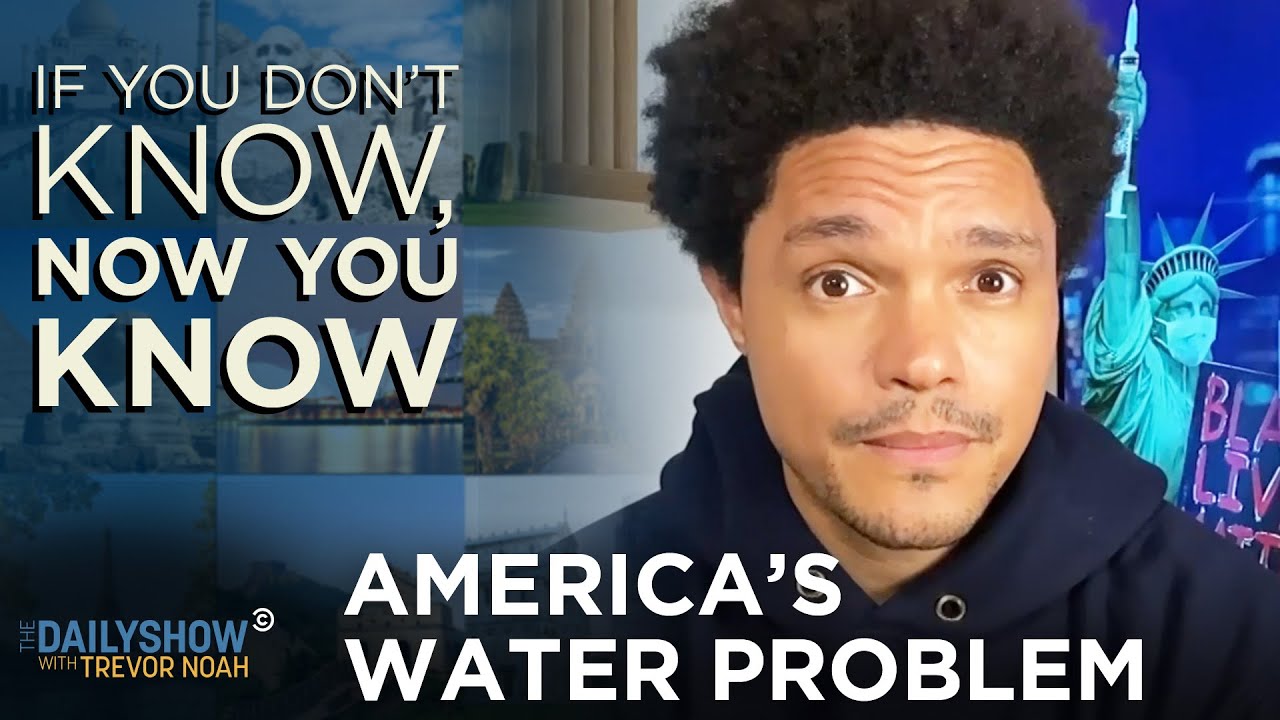
People don’t seem to agree that water is important … what IS next? 
It looks very nice and it seems rare, but if anyone is interested I found it here:
though most of the shipping seems US related.
For contents:
1 Like
A caution about the Lancer edition of that book. Lancer books have notoriously bad binding. The old glue has often disintegrated, and the cover comes off cleanly from the interior pages. It can be fixed with binding glue (BroDart Bind-Art Adhesive) or even Elmer’s glue (adequate, but not as good; use rubber bands to hold the cover tight to the pages and let the glue set for at least 24 hours).
I think the water infrastructure issue is fairly well known among Americans who follow the news. Washington, D.C., and some suburban Maryland counties had a well-publicized series of water main breaks a few years ago. It was noted at the time that much of Washington’s system is cast iron older than 100 years. In one Maryland case, the water was so deep it shut down a major road.
Water infrastructure, however, is generally a local responsibility. As the video intimates, re-piping is expensive, and politicians don’t want to spend money on projects that won’t get them many votes.
Dangerous dams (usually earthen) are also a big problem nationwide. Some years ago, South Carolina, had historic storm flooding, which broke (IIRC) 22 dams. I was familiar with several of them (even drove over one of them in past years) because a close friend lived in Columbia, SC.
Then there is our dry West, which is draining the Colorado River as well as the aquifers. Albuquerque, New Mexico, has experienced horrible water shortages for at least 40 years. And the Colorado’s outlet to the ocean dried up at least 20 years ago or more. This is a problem arising from overpopulation in the dry areas.
3 Likes
Well you would wouldn’t you!
“A completely paralysed man … has used a brain implant to ask his caregivers for a beer.”
6 Likes