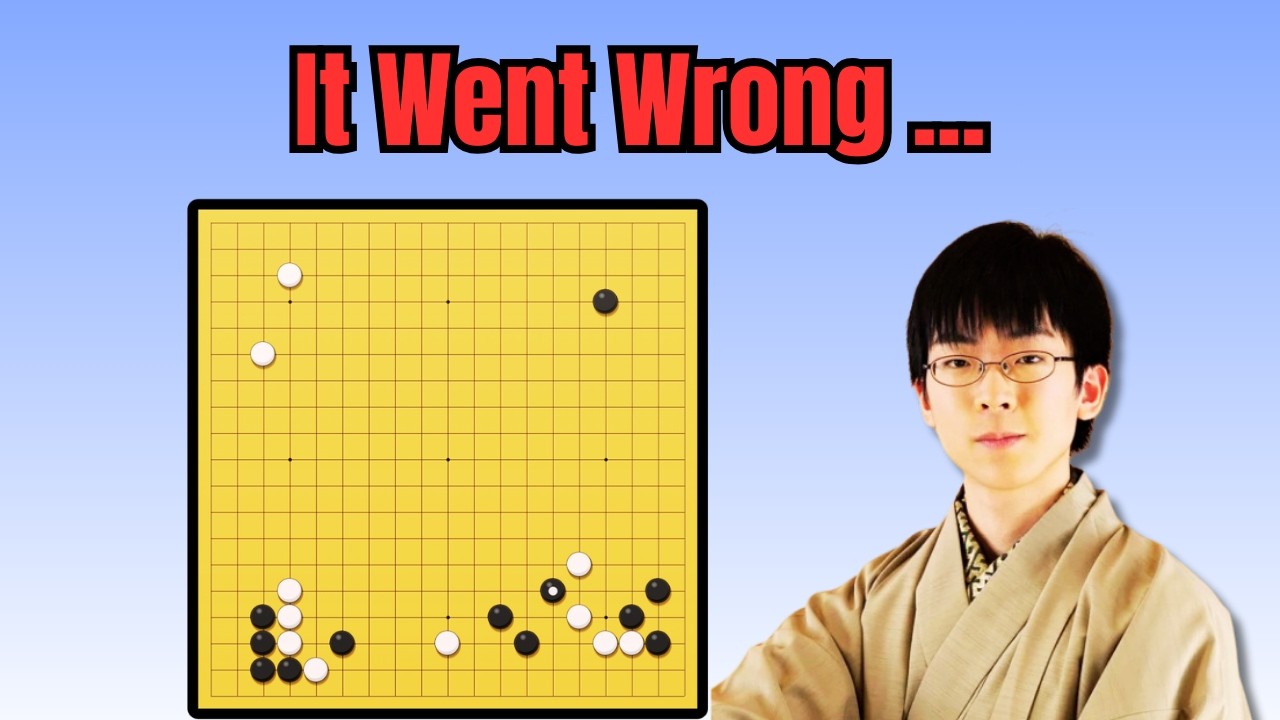
I’d encourage you to just accept that there are people out there who are better at chess than you in every aspect of the game.
Sure, it is frustrating to play against someone who is on another level but feeling the need to degrade the game out of your frustration is … not what you should do.
So, it is not about “truth” or not. It is a purely subjective explanation on how and when I still enjoy chess and games, in general.
I have similar opinion about all games, including Go.
If I was to play basketball, or Go or League of legends or any other game against someone that is “ranked” then the opponents would find it boring (that is actually what that ranked chess fellow told me, that he found playing against me boring) and I would feel that I had wasted their time, which is why I know my place and I do not even play any games with people that are very far above my abilities.
I respect the time of the opponents.
Therefore…
…if you think that is “expressing any frustration” or that is somehow “degrading those games”, that is not my issue, because that is not my point.
With Chess you know why you lose and you know why you win. It’s annoying if it all depends on knowing the right opening, but for the rest it’s just: the best one wins.
With Go, even if I win, I have no idea why.
Also, with chess, most general advice is indeed demonstrably useful (don’t enter the Queen too soon in the game, castle your King, open in the centre, create open lines for bishop and rook). There are exceptions of course, but it all makes sense. With Go, most advice is useless (take care of your corners unless you shouldn’t, protect your territory, but don’t do it too much, attack but also defend, defend but also attack).
The fun in Chess is if you win or even make a nice draw.
With Go, occasionally you can use some dirty trick (like a “fork”, although I am sure there’s a fancy japanese word for it) and gain a lot of your opponent’s stones and that gives some fun. Winning or losing is completely meaningless, like throwing dice.
I was playing chess with a mate, neither of us are very good. Both our clocks were low, though his was lower than mine. I had trouble thinking under the time constraints, but I thought that if I just kept playing moves I should be able to make him time out. He put me in checkmate with 0.1 seconds left on his clock.
If you don’t have idea why you win, obviously you are missing the basics of the game, and in some way, is normal if you are low DDK.
Maybe you are getting bad advice for your level or asking the wrong questions. To say that advice is useless is quite a bold move.
A game of go can have a lot of dirty tricks, but is not easy at all to see it. You have to learn the basics, and once you do it, then you will learn “dirty tricks”
That’s probably true, although I have read pretty much all “Go for beginners” information there is and did a lot of those “survival” puzzles, which are normally quite easy to do.
But that was not my point. In chess, I’m sure my ratings are very bad too but whenever I lose I can see exactly why. Probably with a higher rating it would be more difficult to tell.
Advice is either in the “you should have used more influence” or “you should have defended your territory” categories, depending on the situation. I am sure that’s solid advice for particular moves in the game, but it still doesn’t tell me when to do which in general, i.e. how to decide which to do. Whereas with chess, most advice is generally applicable.
Or advice falls in the category of using some Japanese words that I would have to look up and then find a lot of examples which I am sure apply in some abstract way to my “problem”, but it’s hard to see how.
Simple example: whether I am black or white, in about 85% of the cases, my opponent in his 1st (when he’s white) or 2nd move (when he’s black) will block the possibility of starting territories at opposite sides of a diagonal. There’s no way to avoid it, and in those cases, right at the start I already don’t know how to keep things “interesting” (i.e.: the possibility to have “dirty tricks”, see below).
The “dirty tricks” are the main reason I still play the game. They are the fun part.
I am sure it isn’t but by all practical means, it amounts to the same thing for me. But I have come to accept it and enjoy the occasional “dirty trick”.
I’m almost sure you didn’t get the right advice from somebody. Tell to a DDK to make use of the influence is not the best of the advices IMHO, influence is one of the hardest things to learn.
I offer to give you some time in voice chat and review your games with “normal” words. Send me a DM
Maybe a bit off-topic, but I dont think that’s just a DDK issue, since I also struggle with it from time to time. It’s easier to determine how I won or lose when I missed up some sequence, mess my corner shape, or the opponent does some obvious mistake and give me some advantage. But it isnt that easy to tell sometimes where it went wrong, or how the gameplay could be improved? Especially in close games?
(And I also feel like that corralates with my inconsistency)
A lot of games have this issue, but generic advice is not as bad as it sounds:
In order to avoid generic advice, then specific advice should be sought for, therefore…
… therefore in such cases, it is a good idea to request for reviews in specific games and ask for potential explanations/variations.
A good channel to follow for that is this:
…where a lot of concepts are explained and in its game review a lot of analysis and explanation is being presented in a very understanable/clear way.
Close games are easy to find out what went wrong.
If you replay/review the game, there are bound to be at least 3-4 occassions during the game where the opponent played there first and you went “oh, come on, I wanted to play there!”
If you review the game, spot those cases and think what you could have done to get sente or if you could have alternated whatever moved you played right before, with that move, then you are already improving your situation.
Well… to stay on the main topic, I’ll say both in chess and go, there’s sth common in player development. Development in tactical ability goes parallel to development in strategic ability.
So… missing the chance to play those moves that benefits both me and my opponent could be due to many reasons, it could be because I have other areas to worry (which can be caused some earlier tactical or strategic inaccuracies), or me missing the strategic value of the move.
In conclusion, as a pattern in go and life, it’s both so simple but also so complicated.
Something intriguing about the clock functionality and culture between chess and Go:
In chess, the clocks often do not have any countdown sound even when the time is about to run out. My understanding is that this is because having the clocks do a countdown would disturb the players’ concentration. Therefore the players are all trained to glance at the clock to check the remaining time while playing.
However, chess tournaments often have an audience sitting or standing at the back, which is an innate source of sound and distraction.
On the other hand, not only does the clock in Go do countdown, some clocks even have sound when you press the clock so that the player knows whether you pressed it or not. An orchestra of countdown is played when all the players are in byo-yomi. There was one professional tournament where they removed the countdown and many players lost by time.
However, in Go there’s no audience sitting at the back and the playing hall is mostly silent. Even the photographers are requested to leave the hall after 15 minutes, allowing the players to fully concentrate on the games.
IDK how you imagine a chess tournament but it isnt noisy. An audience doesnt do more than a small visual distraction (I can also confirm that watching other games when waiting your opponent to move is also pretty much a culture, You watch from a distance, generally dont watch for too long and dont make any noise.) You aren’t really allowed to make noise or speak. So the only noise really there is the clock pressing sound, movements of pieces, walking and chair moving, arbiter handling the result etc which I can call minimal sound
In the big events that media can take photograph etc. there is generally a time restriction, e.g. sth like “you can take photos/videos in the first 15-30 minutes from games starting”, similar to what you mentioned for go.
I can confirm the sound of “ten, nine, eight” coming from next table would be really disturbing when you are in the middle of calculating some complicated variation. Can confirm many players being annoyed on less noise, sometimes rightfully, sometimes not. And part of the reason is both the time controls used and nature of the games. In chess increment by move is really common, which allows spamming moves that doesnt change nature of position if your position is good enough to allow it, to gain time on the clock. Also many games end without either player coming into time trouble. It is counterinuititive in go logic to not use time that you have for finding something better, but it’s stressful to play in time trouble and (especially in calmer positions) what you can achieve with thinking more may not be that significant, but that time which you hadn’t used now may be much more needed 10 moves later when the position becomes complicated or you need to calculate longer variations.
In contrast, in go, as far as I heard, byo-yomi is standard and main time is almost always used. Not really surprising the countdown being standard, though it’s surprising to heard people are not disturbed from that.
When you have so many people there will definitely be some noise and disturbance, which is why in Go nobody is allowed to stay in the room. Are you going to throw them out just because they whisper, cough or move their chairs? (I can always hear a lot of people coughing btw.) There was a recent clip where Hans Niemann was asking a kid in the background to be quiet because he was talking.
Watched some of “2025 Esports World Cup” and the audience was indeed pretty loud sometimes. Don’t know how common this kind of chess tournament is but some of the best players were there. https://m.youtube.com/shorts/Dhac3ZDqJDs