You’re correct, in fact, it must be equivalent to a rule of this form.
It might not be the most easy way to describe the rule in that form though 
You’re correct, in fact, it must be equivalent to a rule of this form.
It might not be the most easy way to describe the rule in that form though
Could you elaborate on in what sense knowing the color of the empty board pins down the first quantifier? I thought I understood this before, but after thinking some more about it it doesn’t make sense to me.
If all rules referred only to stones, I could see how a red empty board would imply the rule being of the form “there exists stones such that…”, while a green empty board would imply “for all stones it holds that…”. But what happens with a rule of the form “for all empty intersections…”?
Counterexamples:

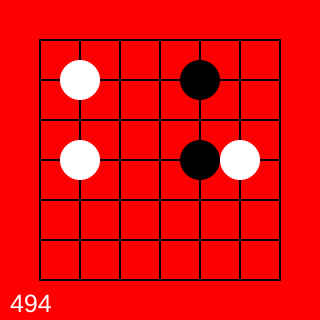
For the following rule guesses I would suggest a rule similar to the original Zendo: You must provide two koans, one that you believe is green and one you believe is red. If you are correct you are able to make a rule guess where I then have to give counterexamples. Otherwise you’ve already generated your own counterexample. That way you have to test first with koans whether your rule might be correct.
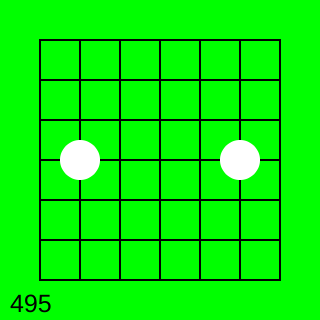
Yeah, you’re completely right 
I noticed that all four red koans revealed so far have either EWEBEWE or EWEEBWE on the middle row. Let’s explore this further:
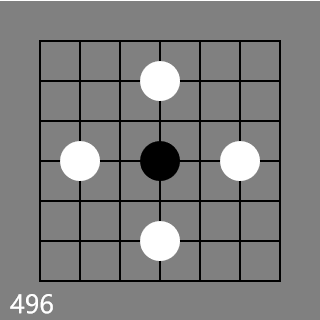
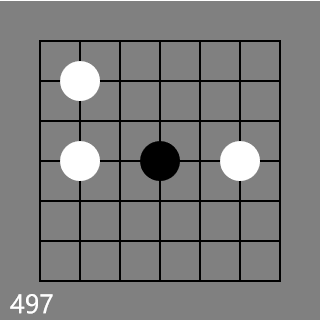
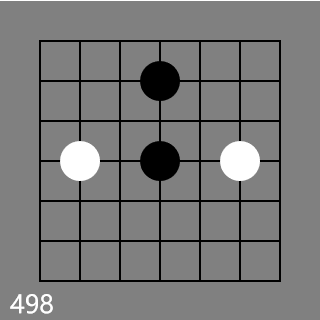
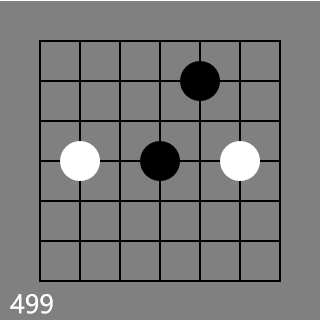
All red
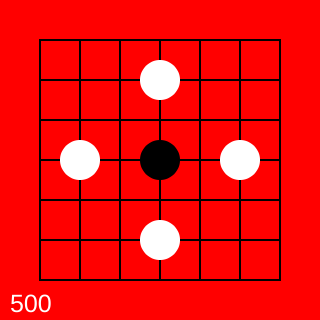
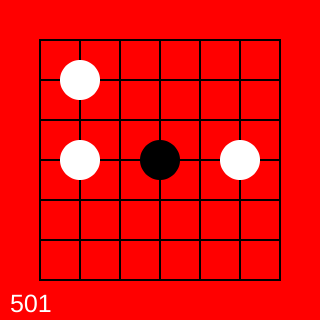
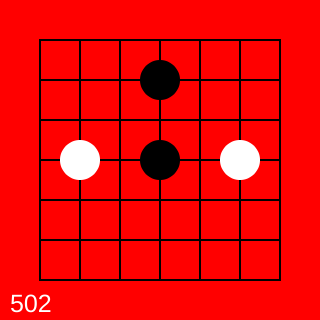
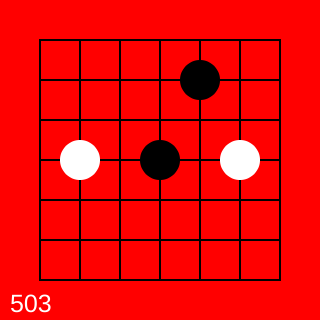
Hm, what about moving the White stones’ positions from koan 488?
(The previous 4 koans all contain the initial stones from koan 488.)
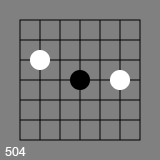
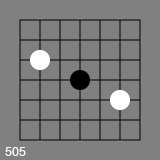
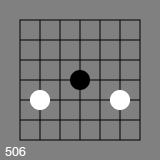
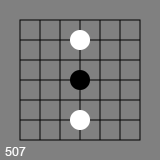
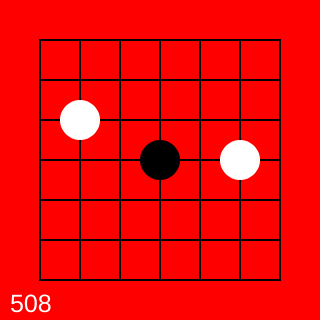
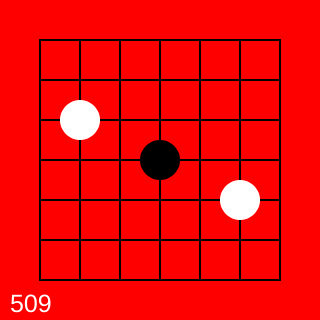
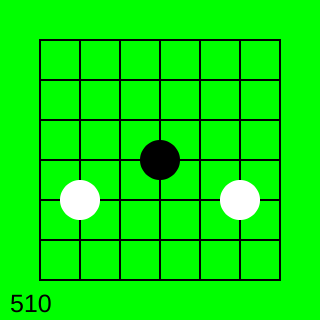
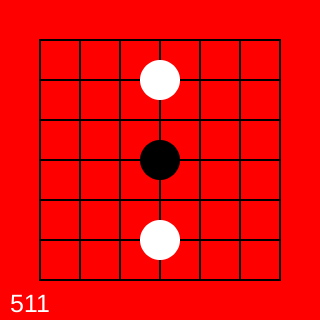
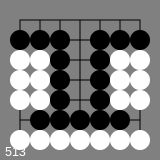
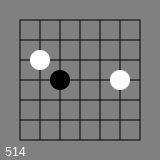
If 513 is green, the rule could be something like
All maximum-size white chains see all other white chains,
where at least the black stones have non-zero size
.
508 is what would force the black stones to have non-zero size.
514 is my attempt at inferring what that size might be.
(However, if the rule is something like chains seeing chains, then
it might be using rectangles instead of Euclidean lines and radii.)
Variations of #510:
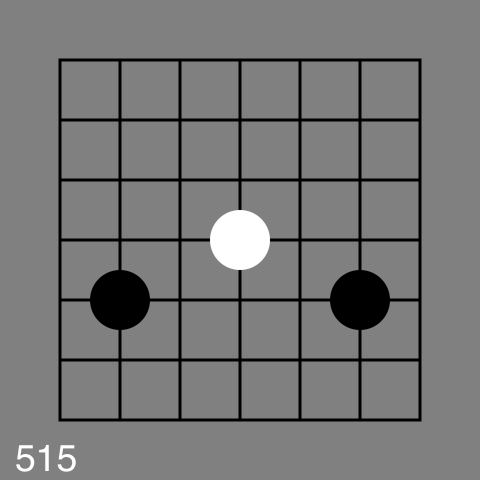
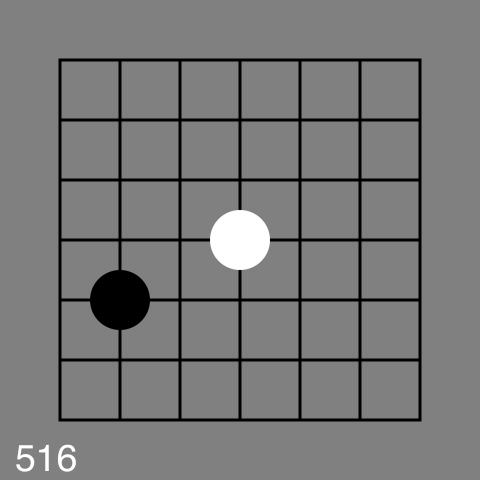
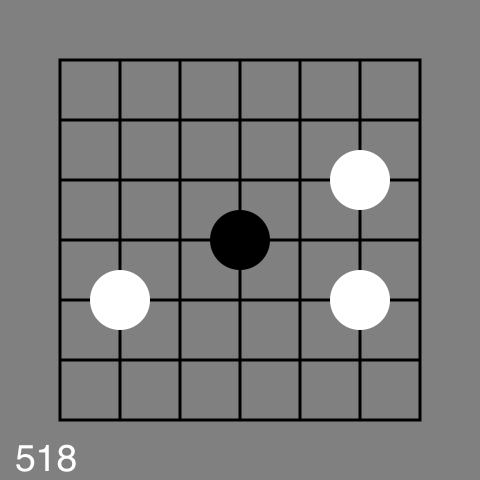
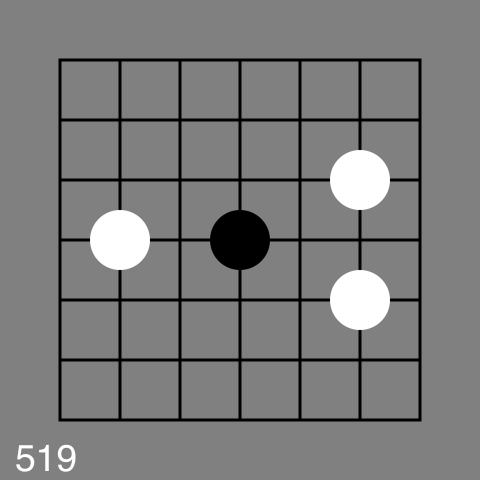
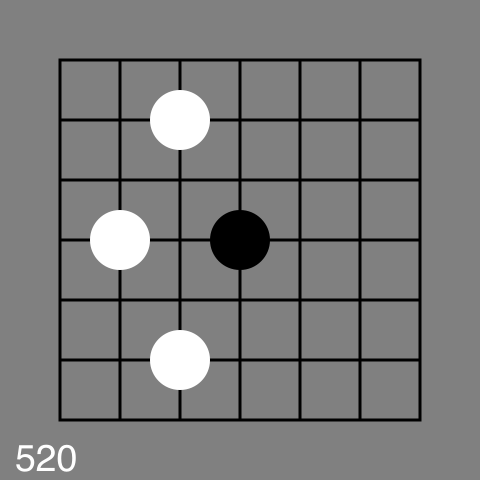
I sort of assumed that the rule is invariant under isometries while crafting these koans, but we don’t know for sure.
Indeed 513 is green and 514 is red, so you can now guess a rule
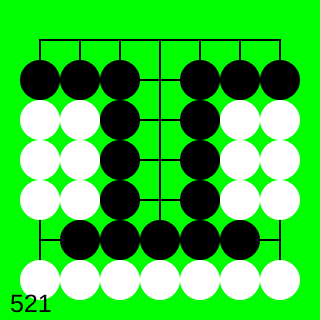
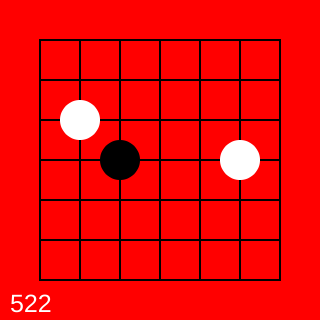
But I’m not sure I understand what you wrote, can you clarify?
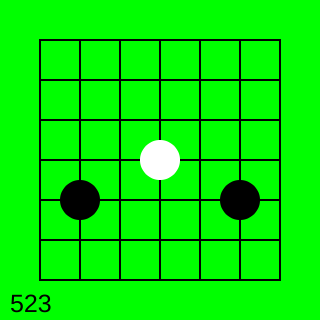
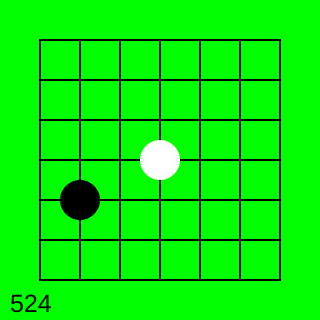
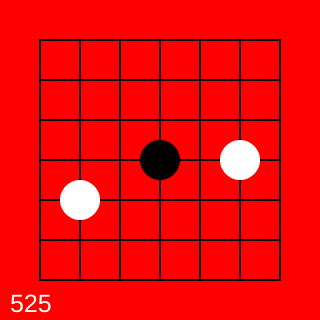
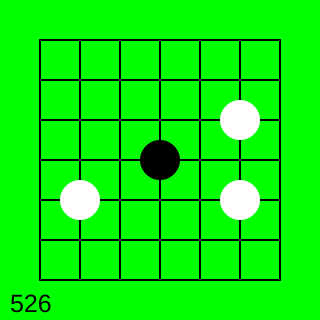
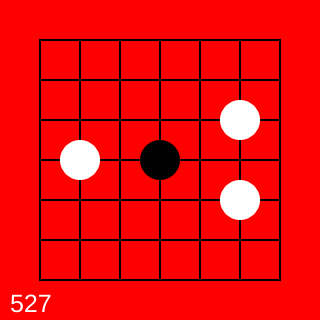
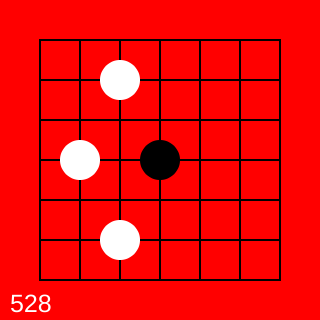
I do not yet have a rule guess. I was just putting my thoughts out.
I think your idea about lines of sight is good. I haven’t checked carefully, but in all green ones with more than one white chain I think each white chain can see at least one other white chain.
This seems to apply horizontally, but not vertically, and perhaps for both colours.
Edit: And this koan contradicts koan 528 in that:
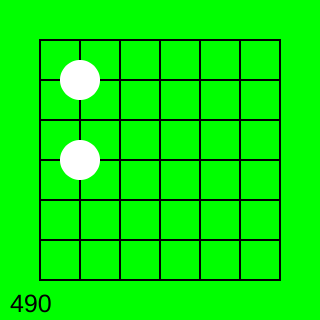
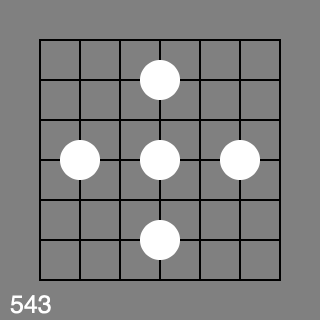
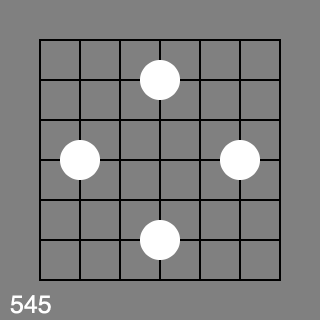
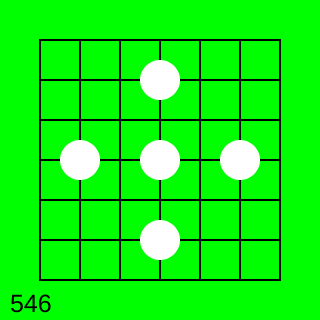
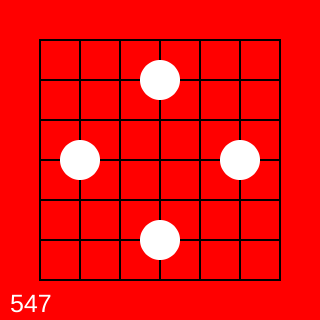
If it is about line of sight along rows / columns, then I’m wondering if the following Koan is Red:
I have two rule guesses:
In the sense that group X sees group Y if there is an orthogonal straight line of empty intersections between two stones of the two groups.
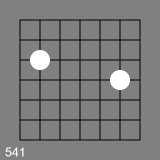
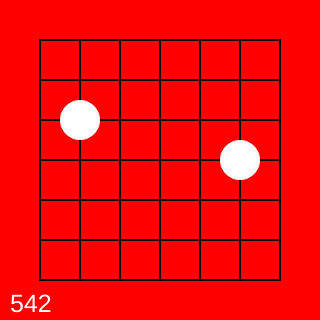
Under rule 1, I expect the following to be both green, while under rule 2, they should be green and red.