Had this on my feed but absolutely relates to Go as well (its a chess video)
Certainly something that i think impacts me in most of the areas he talks about..
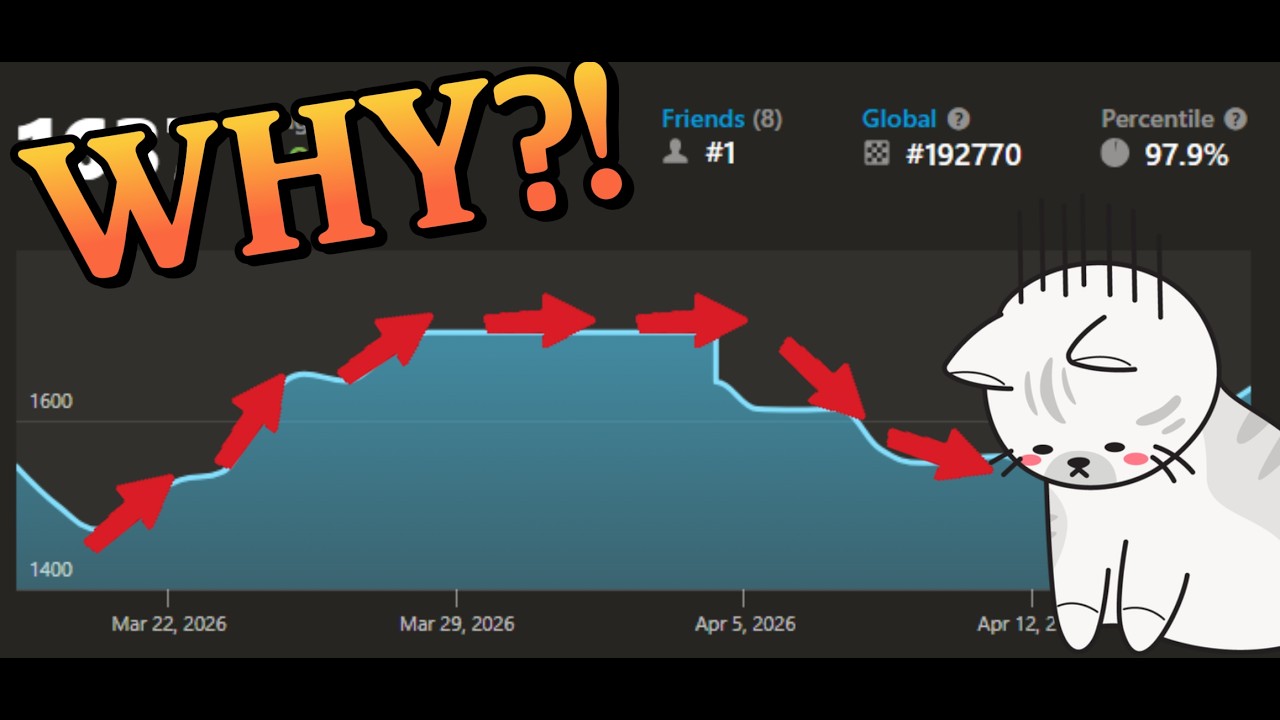
Had this on my feed but absolutely relates to Go as well (its a chess video)
Certainly something that i think impacts me in most of the areas he talks about..
It seems like a really good video, lots of ways of trying to improve how you play and find reasons why you might be playing poorly, or playing well and then blunder.
Possibly one small point against it, is just how with certainty it’s presented  Paraphrasing, “you’re not plateauing because that’s your level, you’re plateauing because you’re inconsistent”.
I think there probably is a lot of truth to that, and I think what’s covered is very good at following up on that claim.
But sometimes you can also plateau because you don’t know things.
If we bring it back to Go, sometimes you can’t solve Tsumego on the spot that you haven’t seen before in a game: there’s not enough time, you haven’t come across the idea that’s needed in the solution, your reading ability has limits, how effectively you can brute force “all possible options” has limits etc, or it just isn’t committed to memory yet.
Similarly, sometimes you can just have different judgement on whether a position is good or bad, and that’s something you have to learn (lots of ways available). If you undervalue a ponnuki in the centre of the board, or sente in the endgame, it might not be something you just figure out one day by itself.
So I think there can be roadblocks to improvement over just consistency and calculating better.
But when consistency is the issue, then all the points brought up are quite good and map well onto Go also
(Maybe it’s more a style thing anyway - it probably works better to tell you X is the issue in a video, than X could be the issue in some cases )
Another easy way to improve/train consistency and “digest” the knowledge you already have is to increase the timer.
If you are always blitzing, well, it is hard to reflect on the game afterwards and it is a bit hard to stay consistent when you allow yourself only a few seconds per move.
The title “mental problems” had another connotation for me… It’s only after reading the post that I understood it was about mindset during the game.
Ideally, at each move we should
All of this is difficult in blitz games, but even in a long game. Our mind is lazy and easily develops bad habits.