I also learnt music in school and I know how to play some instruments. I just never dived deep into music theory.
Just like how some Go players can play Go without knowing any Go theory.
I also learnt music in school and I know how to play some instruments. I just never dived deep into music theory.
Just like how some Go players can play Go without knowing any Go theory.
I wasn’t sure for your part of the world so I limited my comment to what I was more sure (although I’m far from knowing the schedule of every western countries) but yes I was guessing it could be the same!
I think the relative minor of a major scale is something I’ve learned in school (when I was about 10 to 14 years old). But there are probably many people who forgot stuff like that, because it’s something they don’t need to know in other contexts.
Nice example, I don’t know what that sf means. I only know pp, p, mp, mf, f, ff.
That’s sforzando, or “suddenly loud”. Not to be confused with rf (rinforzando, reinforced).
Well, some means some, composing usually means you know a lot, though a point to be noted is you can compose music without music theory knowledge.
Bingo.
My western music theory is very limited as that was self taught, but that’s where I started.
My music theory knowledge mainly comes from Hindustani Classical
Atari!!!
Oh I had no idea.
Here there’s no mandatory music classes in school, but when you’re a child, usually parents force you to learn painting or music


As others have said, these are not “music theory”.
To clarify: they are music notation.
Theory starts with “explaining”.
“This dot here is called C, you press this key to play it” is notation.
“Each note has an ocatve 12 semitones above it: that note has the same name.” is theory.
It gives you something to expect: when you know that this key on the piano is C, then now you know these others ones as well, because you know the theory,.
You can know a lot of theory without knowing any notation (guitar players are reknowned for this).
+1
Music theory is the study of how music works, acting as the “grammar” and vocabulary that allows musicians to understand, analyze, and communicate musical ideas
Some easy terms that most people might’ve heard: Pitch, notes, scale, interval, chord, meter, rhythm, key, bar, tempo,
I can read what @jlt posted and this:
… but I still voted “no”.
As far as I understand the term “music theory” that involves the knowledge of not only being able to read and play/sing the notation, but being able to understand why the composition looks like that in terms of scales and chord/note progression and be able to at least improve an existing composition, if not outright make one from scratch.
I do not have that knowledge. I should have, but I have not managed to put in the effort yet. Hopefully in the future. 
Or Michael Jackson.
I took up the harmonica about a year and a half ago, and I’m definitely learning, but it would be quite a stretch to say that I understand music theory. Had a somewhat weird experience the other day. I was sawing away at the low octave end of that harmonica when suddenly I couldn’t shake the feeling that I was doing something akin to losing liberties. It was like I was somehow going to lose those notes through—what—-a snapback?
I cannot explain this.
I’m not sure what your experience means, but I find is fascinating. Maybe you were beginning to feel restricted by staying in the lowest octave, just as losing liberties makes us feel confined. You were perhaps feeling the need to reach for more space by expanding to higher octaves.
BTW, I think the harmonica is a marvelous instrument: super compact but tremendously versatile.
Your theory strikes me as plausible, and it’s true that I’m still very limited in what I can do with those higher pitched keys. Something to work toward.
Another possibility I’ve considered is that working those one and two holes put me vaguely in mind of the one-two points in the corner of the board; the lower left corner to be precise. It’s probably nonsense, but it did enter my thoughts.
The harmonica is indeed versatile, surprisingly so to me. I had always associated it mainly with the so called campfire music, but it does much much more.
A wonderful showcase is the work of Little Walter, considered the greatest Blues “harpist” (harmonica player) of all time.

Beautiful anecdote and it feels true and relatable. In music we do lose liberties as we reach the end of our instrument’s range, our options for developing the song are actually restricted and there is a drive, if you will, or pressure, to return to the middle of the range to increase liberties…
I was reminded of this when looking up how to play “Summertime” … here’s an example of how guitarists think in theory without notation…
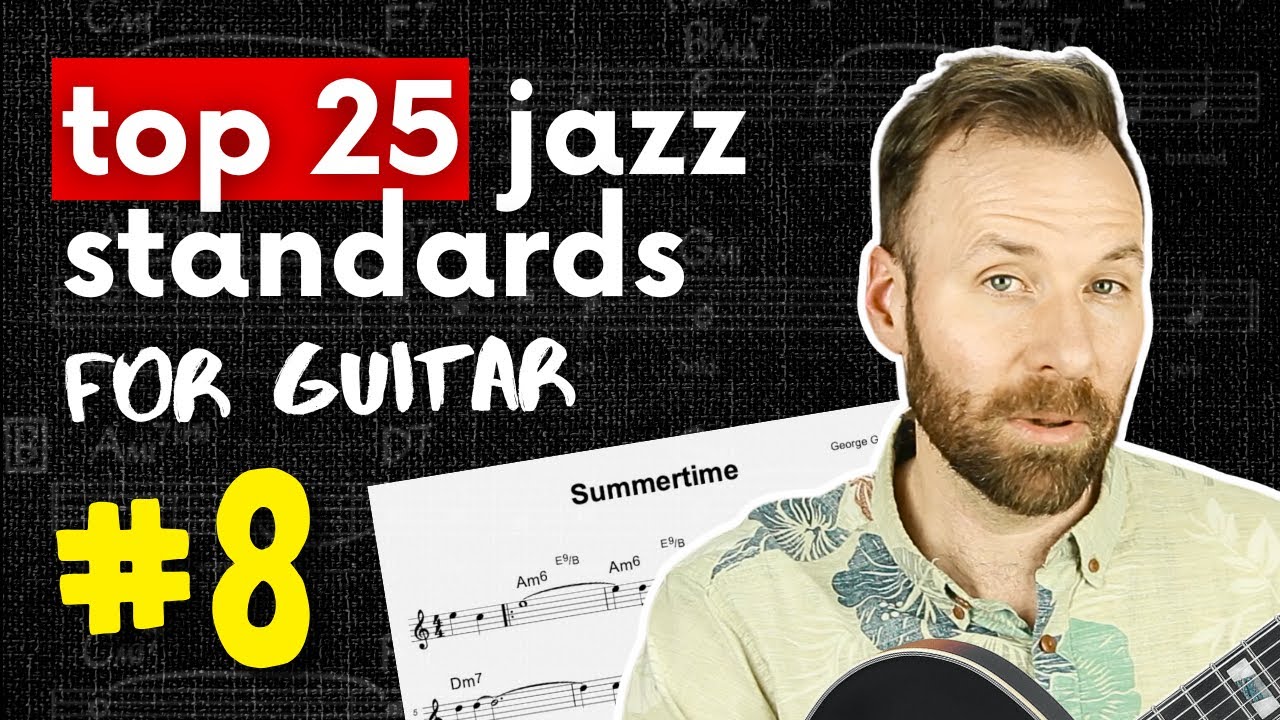
(The notation is there earlier in the video, but any guitarists will skip that, to get to this point  )
)
Many go players are music lovers and sometimes musicians. Listening to Kajiwara, 9-dan and classical singer, in Tokyo’s geisha district, reminds us that go was one of the four royal arts of the Japanese imperial court, along with calligraphy, painting and the harp.
Musicians are generally polite people, at least when it comes to etiquette. At go, etiquette dictates that, except between consenting friends, one should speak as little as possible while playing, that a stone put down should be played, and that one should know how to give up if one is too much dominated: the symphony will only reach its conclusion if it is beautiful, i.e. balanced.
Le Go aux sources de l’avenir (by Pascal Reysset)
