Humility check: So, here I am, an OGS 8kyu about to open my big SDK mouth and try to comment on a game by a 9 dan professional. I know I am FAR out of my depth, but I feel like I have some interesting insights to share – or at least a poetic way to express them. Here we go.
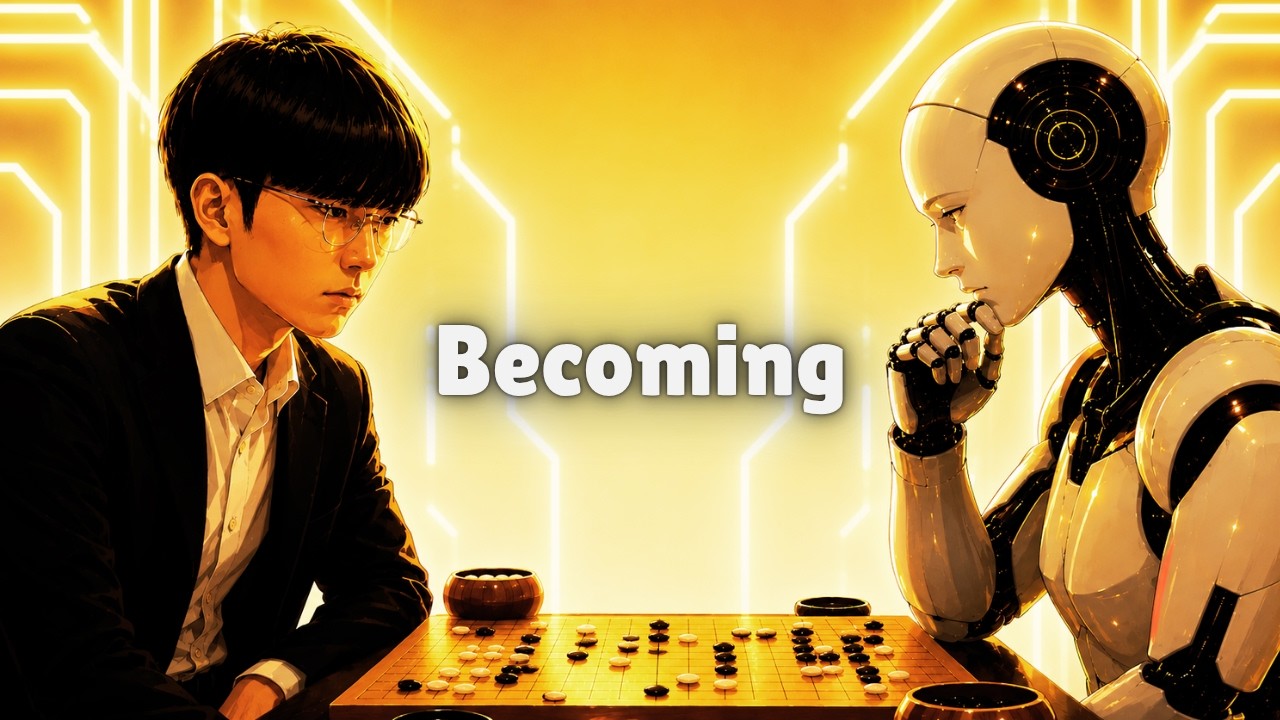
In July of 2026 – about ten years after Lee Sedol’s historic win against AlphaGo – Shin Jinseo faced KataGo in a 3 game match – with a 2 stone handicap and 0.5 komi. These particular values were set for the game because SJS himself had suggested them – he revealed before the match that in practice games, he had never beaten KataGo at two stones, and never lost at three. This was about as “balanced” as he could make a handicap game. The question was, could he actually win?
I’ll save you the google search – SJS lost the first game, and won the next two. I didn’t get to watch these games live, but I have enjoyed watching this particular YouTube channel, as place with high quality commentary on professional games. You are welcome to watch them if you have time – they’re about 45 minutes each:
Game 1
https://www.youtube.com/watch?v=9R3htMM33dc
Game 2
Game 3
https://www.youtube.com/watch?v=711sKZ72n68
Again – I’ll give you a quick recap to save you the time.
Game 1 – Shin was initially shaken by an unconventional opening from KataGo, and ended up mired in many complex fights. He staked a lot on capturing a large central group, which managed to escape. In the after game interview, Shin reported feeling under pressure, much in the same way that Lee Sedol had in the past.
Game 2 – Shin started off complicated with a Flying Knife joseki in the lower right. He managed to not only fight it out to seki, but filled up a good quarter of the board. From then on, he deliberately avoided complications, and did his best to just play solid moves and hang on to his lead. He navigated a complex reading problem with zero mistakes and won by 4.5 points. Still – even though he tried to avoid fighting and complications – the game was incredibly complex, and gave the commentators lots of very high level professional reading to talk about.
Game 3 – Shin took something that worked in game 2 and ran with it. In every single situation, he avoided paths that would lead to complicated fighting and settled the stones to gain influence or territory as the case demanded. The commentators were perplexed – this looked like an SDK game. All the moves made perfect, logical sense with no complex reading or daring tetsuji, and yet Shin won comfortably by 11.5 points.
I’m going to quote some of the things that the YouTube commenter (GoGameSeries) said during Game 3: He said it felt like
“The game is becoming more and more like a strong amateur level game. The people who were commentating they’re like, OK, well I can play this as Black and I can win. Right? Not just professionals, but strong amateur level players. They’re like - Yeah, I can continue this, I’m confident I can win against Katago… which is not a feeling you will have very often. But this game gives us that feeling. It’s like everything is settled, there’s no room to fight.”
What surprised me was that the commentator was rather disappointed – not in Shin Jinseo’s win, but in the manner in which it happened.
Before he watched Game 3, he thought he’d have to take all this time to prepare, read all the expert commentaries, spend 3-4 hours doing his own variations. But none of that happened. In his words:
“I watched the game – there’s nothing that happened. So it’s a bit unfortunate – he’s done super well in Game 2 and Game 3. I’m excited for him, but on the other hand, I always look for good games where exciting things happen, but this is just not one of them.”
I was very surprised when I heard this. I had the exact opposite reaction – I was excited because – the way I saw it, Shin Jinseo had discovered was a brilliant blueprint for beating this or future AI.
I downloaded the SGF and played through the game move-by move on my own version of KataGo running on my gaming PC – lacking much of the OOMPH of the tricked out / multi-video card machine they had running against SJS – but still very similar. It was amazing to see how in almost every case, the move with the highest winrate in my PC’s version matched what KataGo played against SJS.
The amazing thing is – even though Shin’s 18 point lead was in constant decline over the whole game, there wasn’t enough time – enough empty space on the board – for that slow decline to change the winrate. It never budged from 99%. By the time Shin’s lead hit 11.5 points, there was no more board to fight over.
The thing is – to the neural network that is KataGo – it cannot tell HOW MUCH BOARD IS LEFT. Unlike a human player, it can only perceive the board state through the very narrow lens of which moves in which spots will increase the winrate, that’s it. As such, it makes AI moves that increase winrate – it cannot tell that this is the time to change strategy and make a desperate all-or-nothing gamble or Black will take a comfortable win, because the option to take that fork leads to more complications and has a lower winrate.
I was emotionally blown away by this concept.
In Asian cinema, manga, and anime – there is often the trope of a great warrior facing their mirror image – their evil twin – someone who knows their every move and counter-move, reads their every intention, who is just as strong, and fierce, and fearless as them – and prepared to fight to the death.
This trope showed up in classics kung fu films like The Legend of Zu, or anime like Samurai Jack.
In Samurai Jack, the samurai defeats his mirror by sitting down, calming his mind, and meditating – giving the angry warrior opponent nothing to fight against, and the fight simply dissolves into mist.
Back when I was about 12-15 kyu, I played a lot of “Centaur Go” on my PC – where my opponent was GnuGo set to whatever strength I was at back then – and I was using KataGo or Leela to show me where the good moves were, and how to manage things like direction of play, looking for big moves, etc.
I remember noticing that – even though KataGo was capable of much more complex fighting – when faced with a 12 kyu GnuGo opponent – it played very simple, clear, thick moves and rarely got into complex fights unless there was a weak group just begging to be cut off. Even though the software was the same – because I could analyze pro games on it – and it would show me incredibly complex reading with uncanny accuracy. When faced with a weak opponent – it stowed its teeth and claws away, and just won in the simplest, easiest way possible.
The amazing thing Shin Jinseo showed was that this weakness could be exploited. That KataGo will happily chose simple moves so long as the change-in-point-score seems headed downwards towards zero, and it has no way of telling that there’s not enough time in the game for it to get to zero. Of course it wouldn’t work in an even game with the human playing Black - they’d start off down by 6.5 points komi, and keep going down from there.
The question now is – could this work for a human in an even game with 6.5 komi with the human playing as White? Is 6.5 points enough to lull KataGo into that same false sense of security so that the human can eke out a 0.5 point win without KataGo unsheathing its complex-fighting claws? Is there a way of settling that much of the board while only losing 6 points of one’s lead? I’m curious to see if other strong players will try this strategy.
PS - I was only able to find a complete recording of Game 2 (Korean TV: 5 hrs 12 min)

If anybody can find links to Games 1 and 3, I’d love to see them all at some point.