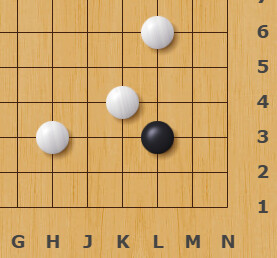
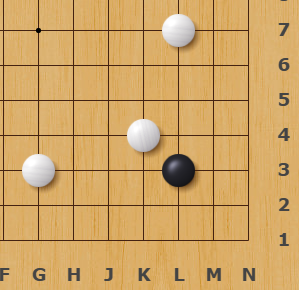
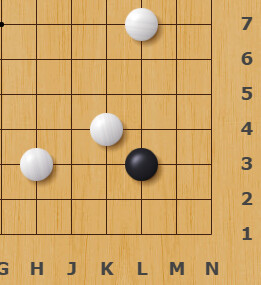
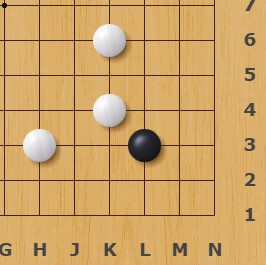
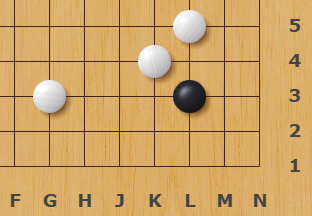
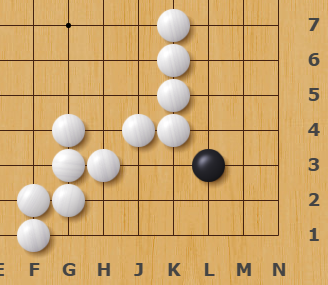
I know I won’t receive a definitive answer that covers all cases, but are there at least some guidelines that would make me less confused about a 3x3 invasion, a situation where I never know if I will be able to live there (unless there are no stones around) or there’s no hope? Here are examples, some more artificial and others that I’ve actually encountered in games, just as inspiration for answers, if that’s useful. Thanks!
2 Likes
great question i have encountered this problem my slef many time looking forward to the answer or at least the discussions of points of view on the retort
1 Like
If you’re playing against a beginner, all of them except the last diagram are worth trying if there are no obviously bigger places to play on the rest of the board. That last diagram is hopeless:
If you’re playing against someone experienced, you can most likely force a ko with a 3-3 invasion in the first 4 diagrams, but you definitely need to wait until endgame to try it, because if you play there too early, you only make White stronger on the outside without guaranteeing you can survive inside – life by ko would be the best result:
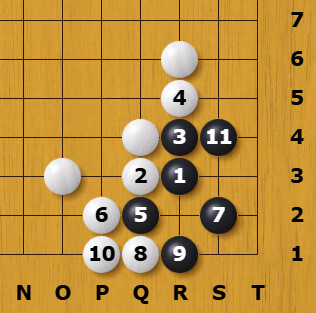
By the way, in a couple of the diagrams, there are better ways to invade (like the 2-4 or 2-5 point).
But of course you can play these situations out with KataGo and see for yourself.
3 Likes
The definitive answer is a strong player knows the answer for all the standard enclosures you listed because they learnt them, from doing tsumego or sources like senseis.xmp.net.
1 Like
You can find some general possible variations on Josekipedia.
In order to know how to live, it may be good to know how a 3-3 dies. In fact you can always challange an 3-3 invasion in an enclosed corner to die. Here are ways to kill a 3-3 Someting with 3-3 It always depends on the outside context, and that what makes it so complicated. Its just an example on how one would accomplish a kill there is too much aji in the example to really kill it.
Actually one standard knights move enclosure is already enough to force the invader into a Ko. You don’t need a second. Play Go at online-go.com! | OGS (Its not a bad Ko, very common.)
With an large knight, you can live in the corner. If your opponent doenst let you, you get much compensation by abusing the aji. This aji depends on the outside of course. Play Go at online-go.com! | OGS
The defender will usually block in the way where they have the biggest support, mostly the direction with the enclosure the closest. Thats why the position of the second enclosure is not thaaaat crucial. It falls more under the context of is the invader strong enough in order to kill the 3-3 invasion.
So, I guess:
- Ko
- Complicated. If not alive there is some aji to use.
- Ko
- Ko
- Likely dead
- Dead
But again, the keyword is outside. The status can change.
1 Like
There is a book by ishi press (written by Fujisawa Shuko?) in English
Something like “enclosure josekis”
I don’t think this is joseki, guys:
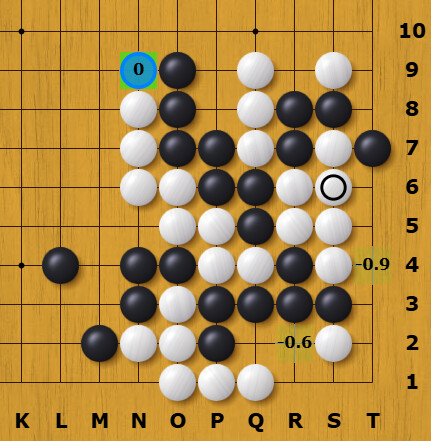
(one of the AI recommendations from this starting position:)

Some generic advice might be more helpful than sending him down a rabbit hole of Go books and tsumego which might not even directly answer his question until 5 years later. It’s a good question, in my opinion.
2 Likes
That’s why I included a link to SL, where I learnt much of this stuff e.g. All About 33 Point Invasion at Sensei's Library has a nice diagramatic table of contents of various 4-4 enclosures.
2 Likes
Nice, that link will be helpful, it deals with some of the exact shapes I posted. As I expected, the answer is “it’s a bit more complicated than you think…”
1 Like
Thanks! By the way, the last one is dead because the vital point is … almost any point around it, like 2x3 or 2x2?
2-2, 2-3, 2-4 anywhere works. White can also pass his turn and still kill Black maybe, if White has more supporting stones above on the right side. Generally when there’s such an overwhelming stone advantage, invasion is completely hopeless.
1 Like
(my emphasis) … against how strong a player? Perhaps 15 kyu or better, though there is obviously no definite rule. But an experienced player could well get lucky against a 20 kyu, even in this position, especially if the latter is a bit timid.
There’s exceptions to just about every rule in Go, but I don’t want to confuse a beginner with too extreme of cases.
1 Like
have a look here sansan.
you can learn the sequences if you want, but you must know that there is a timing for this
2 Likes
Nice SGF, it’s crazy how many variations spawn.
Can anyone explain why this exchange…
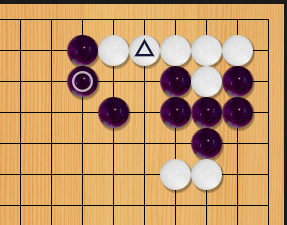
…is preferable to this?
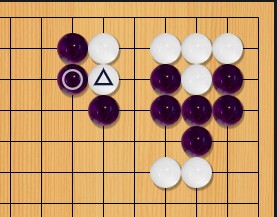
It’s White to move, they could unimaginatively live by extending to 1-2, but in the alternative exchange they get a possible future cutting point at 7-4.
2 Likes
I could imagine the bump being better too in some positions, as it does leave a cutting point there. But I think it’s not 100% a free gain, for example with the solid connect, after white lives by descending 1-2, later white’s kosumi-peep at 5-5 looks forcing as a way to help the outside stones, whereas with the bump it’s not forcing because black’s solid connection at 5-4 is a threat to kill the corner.
4 Likes
Bump is also worse for ko threats against white group, and black descent to 1st line threatens wedge.
3 Likes
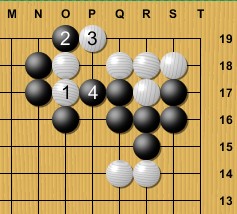
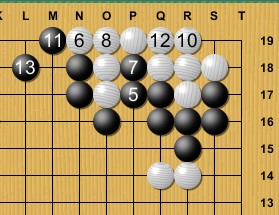
Also “successful” doesn’t necessarily mean “live unconditionally”, a ko can still be a success because you either live there or gain somewhere else from your ignored ko threat, and even dying can be a success if you can get some benefit on the outside from a sacrifice, though this is a rather more advanced strategy.
2 Likes
Yes, but Black has magicked a stone at N17 before playing O19 in that version - you let Black play twice.
1 Like