Writing a philosophical book on Go, would love your feedback

Hi everyone, I’m Uno from South Korea. I play somewhere around the 4 to 5 Dan level, and lately, I have been writing a book about the history and philosophy of our favorite game, titled Infinity on the Tip of Your Finger.

It’s not a book that focuses on teaching Go, but more on the philosophical implications of the game.

I just published the full introduction to the book on Medium, where I explore the massive cultural difference between how the West reacted to AI chess engines in the 90s versus how our community reacted to AlphaGo. I dive into this contrast by comparing the inherent hierarchy of chess pieces to the absolute autonomy and equality of Go stones on a 19x19 board.

Before I get too far into finalizing the upcoming chapters, I would love to get some feedback from this specific community:

  1. Do you agree with the assessment of how the Go world viewed chess AI in the 90s?
  2. Does the philosophical breakdown of a stone’s value resonate with how you actually play?

You can read the full piece here: https://medium.com/@unocloudlake/infinity-on-the-tip-of-your-finger-1d5ad0aa9d36

Looking forward to hearing your thoughts. Also, it would be of massive help if you guys can point me to other websites/forums where I can post my chapters for further feedback. Thanks!

Instagram: @unocloudlake

9 Likes

Hi Uno, interesting article. I haven’t read it yet, but if you want to get more feedback, you can consider posting on r/baduk on Reddit as well. Just ignore the trolls if you see them.

4 Likes

I didn’t play go in the 90s but I remember that unlike chess which was accesible to computers by brute force, go was a domain where human intelligence and creativity would surpass computers for a century or so…

Where did you get that the number of sensible games is around 10170 ? I’ve seen that this represents the number of legal positions in go, but haven’t seen an estimate of “sensible” games.

Last remark:

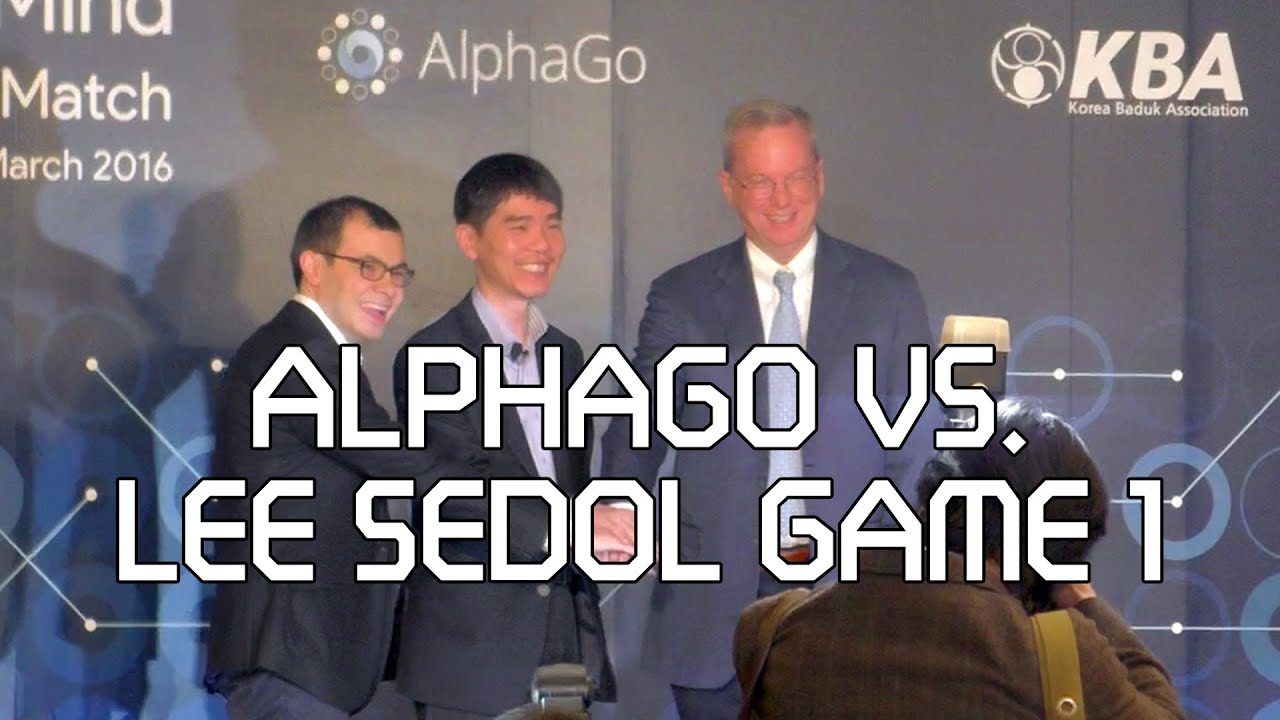
even on the morning when Lee Sedol, one of the greatest masters of Go in history, was playing his first game against AlphaGo in 2016, no one, not a single Go player, thought Lee would lose. No machine was able to beat a pro-level Go player until then,

Let’s not forget that Alpha Go had already beaten Fan Hui 2p. I agree that many people expected Lee Sedol to win, since Fan Hui was just an ordinary professional, unlike genius Lee Sedol, but it’s not true that “no machine was able to beat a pro-level Go player until then”.

4 Likes

Thank you so much for the sharp feedback! This is exactly why I wanted to post the introduction here: get fact-checked by players who know their stuff before the final edit.

Regarding the math, you are completely right. I definitely conflated the number of legal board positions (roughly 10^170) with the number of sensible game sequences. I will correct that terminology so the math holds up to scrutiny. Great catch!

Regarding Fan Hui, you are totally spot-on that my phrasing in the intro is factually incorrect as written. The funny thing is, I actually dedicate a section in Chapter 1 to the Fan Hui match! I dive into exactly why his loss wasn’t much of a consideration for Go players in the East at the time, and how that dismissal fueled our collective hubris going into the Lee Sedol match.

However, I definitely need to rephrase that specific sentence in the intro (“No machine was able to beat a pro-level Go player until then”) so it doesn’t contradict reality—or my own next chapter! I’ll tweak it to clarify that no machine had beaten a top-tier world champion until then.

I really appreciate you taking the time to point these out, and I hope you enjoy Chapter 1 when I post it next!

3 Likes

You do know that go has (almost) repetitions and more than 10 sensible move candidates per turn. Therefore, do not repeat the old wrong numbers of complexity, as in the citation of your text!

“So if we simply calculate the number of all the ways to place stones on a Go board without repetition, then the number is 361!, which is roughly 10⁷⁶⁸.[6] Of course, when you only count the sensible moves, the number has to reduce drastically, and the total sensible moves in Go is roughly around 10¹⁷⁰.”

According to John Tromp, the number of legal positions is L :=
208168199381979984699478633344862770286522453884530548425
639456820927419612738015378525648451698519643907259916015
628128546089888314427129715319317557736620397247064840935

For positional superko, no passes, and no resignation, the
number of possible games is smaller than 361^L because L
also restricts the maximal number of moves per game and there
are at most 361 possible intersections per move.

If you dislike these big theoretical numbers, we can go practical. The longest recorded game had 425 plays before passes (unless meanwhile a longer game has occurred) so 427 moves with passes. The first move has 361 legal plays, each of the last ~114 plays (the last ~50 of 361 plus 64 extra because the game with 425 plays is 64 plays longer than 361) has roughly 50 legal plays. Therefore, the estimate can be roughly

361 x 360 x … x 50 x 50 x … x 50,

where the “50”-part comprises 114 factors and the 361 x 360 x … x 51 part comprises 311 factors.

Another practical approximation observes the longest constructed superko game using four 8-tuple-kos, see RobertJasiek/LongestSuperkoCycle at Sensei's Library . The cycle has 19.668.992 plays and 8 interesting plays per Black’s turn and 24 interesting plays per White’s turn so at most 8^(19.668.992 / 2) * 24^(19.668.992 / 2) variations.

3 Likes

Hi Robert, thank you so much for taking the time to read the introduction and write out this detailed correction! What an honor!

To be completely honest, deep theoretical math is not my strong suit, so I really appreciate you catching that I was repeating those old, conflated numbers. I will definitely update that section to accurately reflect John Tromp’s calculation for legal positions, rather than mixing it up with sensible game sequences.

Getting fact-checked by someone with your level of expertise is incredibly valuable for a project like this. I’ll be posting the next chapters soon, and I would be absolutely thrilled if you continued to share your feedback to help me keep the technical details as accurate as possible. Thanks again!

2 Likes

Actually, my numbers for the 8-tuple-kos are too small. We must multiply by the number of permutations to create the example position, multiply by the whole board symmetries and multiply by the alterations for the useless stones on the rest of the board.

Haha, Robert, you are officially blowing my mind! The fact that your numbers get even bigger when you factor in permutations and whole board symmetries is just wild…

I am currently re-reading the “Number of Possible Go Games” page on Sensei’s Library, but it is just too much math for me XD. Would you say that the math on that page is generally correct then?

Surely, some of the calculations there are correct. Unfortunately, I have not taken enough time to check everything there.

1 Like

Anyway if you want to compare the complexity of chess and of go, you can just compare the number of legal positions in both games:

Now if you want to compare the number of sensible games, the notion of “sensible” is subjective. For instance, at move 78 of Lee Sedol-Alpha Go game 4, my version of Katago shows the following top policy moves:

If Lee’s move was policy 0.5, then surely moves with policy 0.1 or higher should be considered as sensible. Let’s say there are about 50 sensible moves at each step (actually more at the beginning and less at the end), and that the typical go game lasts 250 moves. Then the order of magnitude of the number of sensible games is 50250, which is about 10425. But pros and beginners won’t agree on what is a sensible move or not. In any case 10425 is vastly superior to the number of chess games.

4 Likes

Ok, I have had a bit of a closer look at Number of Possible Go Games at Sensei's Library

The section “Old content” often does not specify whether something is a lower bound, upper bound or approximation, and contains some conjectures without proofs or reference. So do not expect everything in this section to be correct. In particular, some approximations are extremely rough for the sake of arguing about bounds; this should be clarified at each time.

Almost all of the other preceding sections is reasonable. However, there are several inaccuraries. Some numbers are stated as if they were exact but they were calculated as close approximations. Whenever such a number is used, there should be an “about” adjective and some equality signs must be replaced by about-equal signs.

1 Like

I actually think Myungwan Kim had a bet on AlphaGo on winning some number of games, probably not the match though.

I remember it in the commentary because I was watching it recently

Around 2:04:00 ish he says something, there might’ve been another thing earlier but it’s a long stream :slight_smile:

But he does say that pretty much everyone expected Lee Sedol to win 5-0, that even if he was willing to bet $100,000 against it, anyone would take him up on that offer.

Yeah it might be more correct to say like top professional or 9p on a 19x19 board or something like that. Or maybe just “top professional in these settings” is like succinct and somewhat accurate.

1 Like

The source of the upper and lower bounds of possible Go games

And just for clarification, the number of legal Go board positions (a frozen shot of a particular board states with black and white stones and empty space) had been calculated nearly two decades ago, and the number of Go games is a string of the transitions of these legal go positions, hence the huge googoplex number for possible “Go games” (majority of them are self-filling, captured and refilling, etc), and this is assume no positions can repeat (without this limitation, I don’t think there is an upper bound)

1 Like

A few people and some pros at the time knew and saw the preliminary games with Fan Hui, and realize the “strength” and the potential a year prior. So those who knew weren’t so confident at the time already. And there were some tested games by Aja Huang. At the time of the AlphaGo Lee games, I already though it would be at least something like 3-2 for AlphaGo to win, and in a talk when Aja came to Taiwan, he said although they are confident, but realistically, they felt it was a toss up.

2 Likes

Hi Unolee. Your point about the size of the game-tree is an accurate assessment of both why chess engines objectively differed from go engines in the 1990s, and why Go players (correctly) perceived them to differ.

However in the ‘90s my understanding is there was very little pessimism about Go engine research, because (perhaps counter-intuitively) the existing Go engines were so bad (~10k) that it seemed obvious that there was still room for improvement. Then came a period of ~10 years (1995-2005?) where the main Go engines did not improve very much. ManyFacesOfGo, GoDojo, Japanese programs and GnuGo all existed, and were very challenging for brand-new players, but they were not challenging for experienced amateur players. GnuGo in particular (which was widely used because it was free) had glitches that could be exploited even by players who had just learned the rules. My impression is this period around 2005 was probably maximum pessimism about the prospects of Go AI among Go players, although of course there were always AI/computing enthusiasts who kept the faith.

Go AI’s suddenly started to make rapid progress with Monte Carlo Tree Search methods. There were a number of varieties of this, but the basic idea was that from any given board position, the computer would play out thousands of moves using very simple, stupid heuristics, and the candidate move that produced the best win rate among the stupid games would normally be the best move. This technique basically removed the relevance of the size of the game-tree to Go AI. The first MCTS engine was CrazyStone in 2006; the engine ZenGo reached ~1d by 2009; and if my memory serves, in 2015 before AlphaGo came on the scene, the best Go AIs that played on KGS were ~4d. Maybe they were a bit stronger in competition settings with advanced hardware (I vaguely remember some debates about hardware specs for the Computer Olympics).

My recollection is that MCTS methods were initially a huge jump, but then they stalled out for several years where they were not able to take much advantage of additional processing power. I think it’s fair to say that around 2008-2010, Go players who had been burned on the stagnation of Go AI in the 1990s didn’t necessarily see any reason why there would be any additional breakthroughs immediately. There was a 10-year bet between two amateurs in (IIRC) 2001, and the anti-AI side of the bet won that match 4-0 against MFOG in 2011. However around 2011-2012 slightly different Monte Carlo methods started to get a lot more oomph from additional processing power, and from that point the debate became more about how much stronger Go AIs would get before plateauing, and how long it would take to get to that plateau. There were systematic weaknesses in MCTS Go engines that were plausibly related to the fact that their many “dumb” play-throughs were unlikely to catch subtle differences in order of moves.

I think AlphaGo was a surprise mainly in that while most Go players had their eyes on the rapid progress of MCTS-based engines, DeepMind/Google’s completely novel deep learning strategy leapfrogged those by 4-6 stones in a single match.

8 Likes

It need not be the condition “no repetition” but it is sufficient to have some restriction, such as by the Basic-Fixed-Ko Rules, (see the section Applications) ensuring finity of game length to make it classically countable.

2 Likes

Thanks, Robert! That is very helpful! I will definitely keep that in mind!

Thanks for clarifiation! I guess how I felt palyed a huge part in assessing how everyone felt at the time. I do remember that at least the common expectation among the Korean players like me was that the machine is going to lose for sure.

Hi Myrsilos, thank you so much for mapping out this incredibly detailed timeline! Reading through your breakdown of GnuGo, ZenGo, and the MCTS era brought back a lot of memories.

The prologue(or introduction) indeed skips over a massive chunk of this AI history. Because my goal right out of the gate was to hook a mainstream, non-player audience, I used Kasparov and Deep Blue as a cultural bridge to draw a direct, dramatic line to 2016. However, I actually do feature the decades-long historical failure of Go programs in Chapter 1 to properly set up exactly why AlphaGo was such a whiplash moment for the community!

But I have to thank you for something else, because your breakdown of MCTS just gave me a massive lightbulb moment for my second chapter. I hadn’t originally planned to focus too much on the technical mechanics of brute-force vs. MCTS. But as I was reading your explanation of how MCTS plays out thousands of heuristic games to estimate the best move—without ever actually ‘knowing’ the objective truth of the board—I realized it is the absolute perfect analogy for Chapter 2. I discuss postmodernism in that chapter, specifically the impossibility of perceiving the world exactly as it objectively is. The way MCTS navigates the board using probabilistic heuristics rather than absolute calculation is a brilliant parallel to how humans navigate reality.

I am definitely going to consider weaving that MCTS concept in. Thank you so much for the detailed history and the unexpected inspiration!

2 Likes

Hi Uno,

It seems like the introduction spends a lot of time on the chess comparison, ultimately arguing for the superiority of Go, for reasons I generally agree with but may not captivate your audience. Or maybe it will, I don’t know. I’m very curious to read what else you have to say about the philosophical implications of Go.

Rereading the piece I feel like you could improve the ordering or flow to clarify the argument you want to make. I’m reading: chess is complex and symbolic, but actually chess is inferior in these qualities compared to go, but actually it turns out computers can beat humans at go also. But I think: there’s not a perfect correspondence between how many moves are possible, how symbolic an activity is, how edifying it is to play, whether computers can do it, and whether the best computer can beat the best human.

Again, you have good material but I think it needs some massaging for flow and cohesion.

This seems to be the big idea that you’re after:

This is the most sophisticated board game ever created by human intellect, and it takes more than simple calculation. It requires something far beyond logical reasoning, like intuition and creativity — the exclusive privileges of being human.

Or so we thought.

In Go, however, as far as the pieces are concerned, there is no inherent hierarchy of value built into them. They are all the same. One stone is one stone no matter what, and it all depends on you to make your move worthwhile — whether it be a king of a move or a pawn of a move depends solely on you.

There are only stones that unequivocally reflect your value judgment, from one moment to another. You are your own king, queen, bishop, and pawn fighting your own battle, from the beginning to the end. Thus, it is like music — each note either resonates in harmony or dissonates in conflict with previous notes and the notes that follow.

So, this is the idea that I personally hope you will expand on as you continue to write.

Even here I think you can tone down the chess comparison a little bit (and maybe you will in the rest of the book) since a chess advocate could easily argue that the art of the chessboard has to do with much more than the fixed value of the pieces. It has to do with relationships and potentialities which in some ways are more complex than a simple count of ‘how many moves are possible’ would reveal.

By the way, the dynamic French philosophy duo Deleuze & Guattari contrasted chess and go, maybe in a similar way, using some of their idiosyncratic vocabulary:

Let us take a limited example and compare the war machine and the state apparatus in the context of the theory of games. Let us take chess and Go, from the standpoint of game pieces, the relations between the pieces and the space involved. Chess is a game of the State, or of the court: the emperor of China played it. Chess pieces are coded; they have an internal nature and intrinsic properties from which their movements, situations, and confrontations derive. They have qualities; a knight remains a knight, a pawn a pawn, a bishop a bishop. Each is like a subject of the statement endowed with relative power, and these relative powers combine in a subject of enunciation, that is, the chess player or the game’s form of interiority. Go pieces, I contrast, are pellets, disks, simple arithmetic units, and have only an anonymous, collective, or third-person function: “It” makes a move. “It” could be a man, a woman, a louse, an elephant. Go pieces are elements of a nonsubjectified machine assemblage with no intrinsic properties, only situational ones. Thus the relations are very different in the two cases.

This article looks like it would be relevant if you can extract it from behind that paywall.

The relatively higher number of possible plays in Go doesn’t move me, much, relative to other aspects of the game. 9x9 Go differs from chess anyway. And is a 25x25 Go game really that much more profound than the traditional game on a 19x19 board? Again, I don’t think you need to belabor this point, which most people will just read as one impossibly big number versus another impossibly bigger one.

I suppose you are driving at a reconciliation of these ideas that will explain why Go matters to humans even when computers can win against us every time. But maybe I want a smoother logical progression on the journey to that destination.

Your writing is interesting to read so I say this just in the spirit of being helpful, that to me it sounds a little chatty or slangy for what I’d expect in a philosophy book. Maybe it’s fine but maybe there are places where you could use more precise language to convey more to the reader. For example, you wrote that the Go players were chilling then you wrote that they were chillaxing, and that is meaningful, but maybe you wanted to say, they remained confident in their superiority to computers (and to chess players). After all, the Go game may be very enjoyable to play but it doesn’t necessarily produce a state of chillaxation. :wink:

Hopefully this comment makes sense, I’m sure it could also use some editing for flow and cohesion but … uh … make of it what you will.

Kudos to you for getting this far with the book, good luck with the rest of it, and thank you for sharing it with us!

4 Likes