I’m choosing to introduce and teach some basics about Go to my children, well before they turn 10.
2 Likes
Well, already bullied taught some of my fellow classmates while I was in Go school 
2 Likes
Two of my current students are 0-9 years old, so I’m going to go with that.
3 Likes
- commenter
- commentor
0 voters
Usually, -(e)r is the English suffix that attaches to a verb to make a noun meaning “a person who does this thing”.
So:
| Verb | Noun |
|---|---|
| bake | baker |
| dance | dancer |
| debate | debater |
| joke | joker |
| log | logger |
| race | racer |
| read | reader |
| write | writer |
| — | |
| build | builder |
| jog | jogger |
| paint | painter |
| play | player |
| plumb | plumber |
| run | runner |
| sing | singer |
| travel | traveller |
However, Latin ended these words with -or and this has been inherited in English (or re-Latinised).
For example:
| Verb | Noun |
|---|---|
| act (ago) | actor |
| gladio [use sword] | gladiator |
| impero [rule] | emperor |
| sculpt (sculpo) | sculptor |
governor is Latinate but derives from a Greek verb, not an English or Latin one.
sailor clearly relates to sail, but that’s an Old English word.
English comment does derive from a Latin word, commentum, but so do many -er words.
Morphologically, similar references are bend, bender; fence, fencer; send, sender etc. which suggest that the better form is commenter. Duosyllabic references include attend, attender; pretend, pretender and so on.
A nice thing about commentor is that it matches a Latin verb commentor, meaning “to discuss”.
2 Likes
What about commentator?
6 Likes
Linguistically, that seems like a separate word: a commentator doesn’t comment, he commentates. Although that’s a good reference to support commentor.
1 Like
It’s actually the correct German word - “der Kommentator”.
4 Likes
K == C?

2 Likes
Is that a real verb? Also, how is it different from to comment?
In German, usually any “C” that sounds like a “K” is written as a “K”. Dutch used to be the same, but we’ve had a spelling change and now it’s a mess with some words having a “K”, others having a “C”.
There’s other similar things, like “qu” usually being written as “kw”, or “x” as “ks”
3 Likes
K is K in Greek, but C is in the place of Γ in the alphabet, which is usually transcribed as G (different sound tho), and in the place of Ψ on a standard keyboard, which is transcribed as PS. Fun.
3 Likes
in Russian С always works as S
К works as K, it always pronounces
So no problems.
4 Likes
But at what point is it a matter of transcription rather than a distinct word? After all, English and German have very similar alphabets that both include “C” and “K”.
“Carabiner” is an example of loanword from German with etymology from “Karabinerhaken” or “Karabiner”. It seems that “Karabiner” is also an alternative, but less common, spelling of that word in English, so that’s possibly an example of a word transferring into English while keeping the original spelling, but then seemingly evolving within English to a new spelling with “C”.
Another example is the loanword “Kindergarten”, which is the same in both English and German, preserving the original “K”.
So, I guess “C” is generally a “soft C” sound in German, right? What’s going on with the "C"s in a word like “Kuckucksuhr” then? Are they silent or voiced somehow?
1 Like
To be more precise, perhaps I should have written
K = °C + 273.15
6 Likes

1 Like
But Carabiner has a Latin origin through the French word for rifle (carabine). It’s normal in English to spell words of Latin origin with a K. Meanwhile, Kindergarten has a Germanic origin, spelling it with a C would make no sense under any circumstance.
The C in German / Dutch functions exactly like it does in English, except when combined with an H (to produce CH), that has a bunch of different pronunciation, but almost never as in the English “chew”.
2 Likes
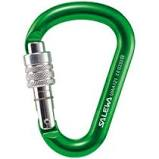

Note that the German word is actually a Karabiner’s hook, where a Karabiner is of course a rifleman, using the hook to attach their rifles to their belt.
3 Likes
Ah, that makes sense. And I always thought it was an Italian word haha
we are on online GO forum
語 (ご) (GO) means language in Japanese
6 Likes
Several online sources list it as coming from the German word. Note that in English “Carabiner” or “Karabiner” refers to a hook like in the picture shared by @Gia and never a gun (which we would call a carbine) or rifleman.
2 Likes