When a Japanese native teaches Japanese pronunciation / 日本語のネイティブが日本語の発音を教えると | Dōgen - YouTube
Yeah, one of the reasons I feel Japanese is a convoluted and badly designed language. It’d be fine to have these differences if words were different. But when so many words are the same, these minute differences start to matter. And when you need to distinguish words by barely noticeable pitch changes + context, it just increases the probability of confusion and misunderstanding, which is never good. I mean, imagine if Japanese used different words for different things? They could do away with kanji and write things phonetically. And people wouldn’t have to waste time on learning kanji, and could spend it on something useful.
Natural languages aren’t designed by anyone though. They just evolve, well, naturally.
I am a native speaker of Japanese, but studying Kanji really took up a lot of my time. Even now, I sometimes wonder if I could have used that time more effectively (become bilingual of English, study Go, do some programming, etc.  ).
).
I’ve been with Kanji for so long that it’s become an annoying friend that I’m attached to. And since there are many kanji that even native speakers don’t know, I often find myself talking about them in conversations with my friends (I like that time).
Multiple words with similar pronunciations have become one of the major contents of Japanese comedy. Japanese people love to laugh at the trouble caused by their confusion over different meaning words with similar pronunciation.
4 Likes
Pope Paul VI on Latin, defending its use in 1962 apostolic constitution Veterum Sapientia:
There can be no doubt as to the formative and educational value either of the language of the Romans or of great literature generally. It is a most effective training for the pliant minds of youth. It exercises, matures and perfects the principal faculties of mind and spirit. It sharpens the wits and gives keenness of judgment. It helps the young mind to grasp things accurately and develop a true sense of values. It is also a means for teaching highly intelligent thought and speech.
1 Like
I’ve been giving myself a headache trying to read the 1886 edition of Decameron, which is apparently the only decent one in the public domain.
How easy or difficult do you find it to understand this paragraph?
A kindly thing it is to have compassion of the afflicted and albeit it well beseemeth every one, yet of those is it more particularly required who have erst had need of comfort and have found it in any, amongst whom, if ever any had need thereof or held it dear or took pleasure therein aforetimes, certes, I am one of these. For that, having from my first youth unto this present been beyond measure inflamed with a very high and noble passion (higher and nobler, perchance, than might appear, were I to relate it, to sort with my low estate) albeit by persons of discretion who had intelligence thereof I was commended therefor and accounted so much the more worth, natheless a passing sore travail it was to me to bear it, not, certes, by reason of the cruelty of the beloved lady, but because of the exceeding ardour begotten in my breast of an ill-ordered appetite, for which, for that it suffered me not to stand content at any reasonable bounds, caused me ofttimes feel more chagrin than I had occasion for. In this my affliction the pleasant discourse of a certain friend of mine and his admirable consolations afforded me such refreshment that I firmly believe of these it came that I died not. But, as it pleased Him who, being Himself infinite, hath for immutable law appointed unto all things mundane that they shall have an end, my love,—beyond every other fervent and which nor stress of reasoning nor counsel, no, nor yet manifest shame nor peril that might ensue thereof, had availed either to break or to bend,—of its own motion, in process of time, on such wise abated that of itself at this present it hath left me only that pleasance which it is used to afford unto whoso adventureth himself not too far in the navigation of its profounder oceans; by reason whereof, all chagrin being done away, I feel it grown delightsome, whereas it used to be grievous.
What’s the difficulty of this paragraph?
- Perfectly easy
- A little bit of work
- Needs a double (or triple) take
- Hard, but I slogged through
- Still not sure what it means
- Is this English?
0
voters
1 Like
I may have cheated a little because I am familiar with the “-th” variations and the french-looking words.
I am not sure about “erst” (german? or “first?”)
Yeah, “first” or “formerly”.
I’m familiar with the -eth forms. It’s mainly the rambling sentence structure that I find difficult, although there are certainly a lot of archaisms.
1 Like
Also, structures like “I died not”
I read a bit further in.
Turns out that this paragraph, being the beginning of the work, is unusually complex. This was the style in Latin texts as well: to start with a lot of flourishes, and then let them simmer down.
The ordinary content of the body of the book is quite a lot easier, especially when read aloud.
2 Likes
English used to be quite a language. I think nabokov’s lolita is uses this sort of sentence structure a lot too, whatever it’s called (some nested inversion?)
For complicated sentence structure I always found German the worst. I remember getting stuck on the first page, paragraph and sentence of an article, when I was a student. (It was a one sentence paragraph that took up the whole page.) I asked a doctoral student specialising in German and he said these things were very easy once you got used to them. Then after about half an hour trying to read the sentence, he admitted that they aren’t always all that easy.
My teacher suggested improving my German by reading the Scandinavian researchers in my field (Latin). He thought they wrote in correct German, but much easier to read than what native Germans would write.
2 Likes
Just now I was reading a 2019 book called The Lost Message of Paul, which is about the “New Perspective” on the writings of Paul of Tarsus.
In the tenth chapter, the author introduces the controversy over the Greek phrase pistis Christou (πίστις χριστοῦ). Apparently a lot has been said about this, much of it technical.
There’s firstly the conversation about whether pistis should be translated as “faith” or “faithfulness” (ie. commitment).
The central debate, though, is over what Christou means in the formulation. It can be either an objective genitive or a subjective genitive.
If it’s objective, the translation of pistis Christou is faith in Christ (by the believers). If it’s subjective, the translation is faith of Christ (ie. faith shown by Christ).
Various biblical editions use either translation. The in Christ translation is apparently especially favoured in Protestantism – see sola fide, “in faith alone”. However, eg. the King James Bible was cited as using of Christ.
The key passage is, iirc, in Galatians.
1 Like
Was watching random videos with games and things. Saw some funny rebus-like things. Haven’t seen much of puzzles like this in English, for some reason. In Russian it’s definitely a thing. (Needless to say, I haven’t solved anything.)
1↓ ある野菜を表しているよ
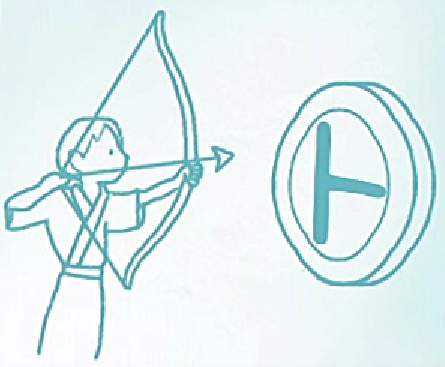
2↓ 続きそうで良かった
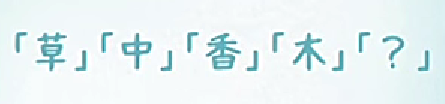
3↓ 今度送るね

4↓ 癒される~

5↓ 食感が好きです

6↓ 大好物
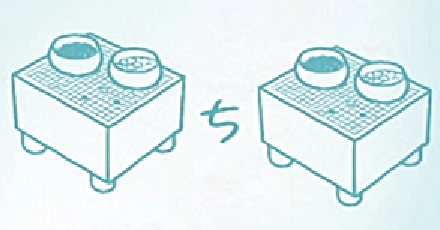
7↓ 葵、ハマってます

8↓ 並び替えてみて
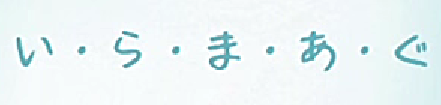
9↓ 今度いきたいな
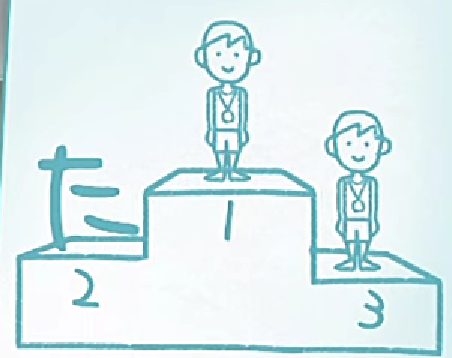
But look, there’s go in there. This means it was all worth it.
4 Likes
Only solve 6 
solve 6
Go games → 囲碁 → いご
い + ち + ご → strawberry → 
2 Likes

1 Like
Toying with moving from a Latin pronunciation of PH as /p/ to /f/.
/pʰ/, as separate from /p/, would be either a very old or very pedantic pronunciation, I think.
Through most of Latin’s existence as a thriving, living language you’d probably be hearing /p/ from almost everyone.
But at some point, it becomes /f/, like in Italian. So it’s /f/ in the Ecclesiastic Pronunciation, and also /f/ in the traditional English pronunciation.
I wouldn’t mix PH as /f/ with V as /w/, but if you’re already doing V as /v/ then it doesn’t seem jarring.
The spelling “ph” was introduced to Latin some time between Terence and Cicero (perhaps by Accius). Before that it was spelt without the “h”, like other aspirated consonants derived from Greek. The unaspirated spelling occasionally survives well into the first century AD (in inscriptions, and also, with less authority, in the manuscripts of ancient writers). The spelling “f” crops up rarely in first century AD inscriptions and only becomes common much later (in the third century).
I don’t know much about the subject; but there’s an interesting phenomenon in a few words which were adopted early from Greek and have an “f” spelling (e.g. “faseoli”).
2 Likes
Let’s learn Volapük pronouns. They all start with O and are formed regularly. They have distinct forms for the nominative, accusative, genitive, dative and positive cases.
If two Volapük forms are given, the first is “polite” and the second “familiar”.
It’s pretty cool to have so much expression.
| English | Latin | Volapük |
|---|---|---|
| I | ego | ob |
| me | me | obi |
| my | meus | obik |
| we (nom.) | nos | obs |
| we (acc.) | nos | obis |
| our | noster | obsik |
| you (sg.) | tu | or, ol |
| you (acc.), thee | te | ori, oli |
| your (sg.) | tuus | orik, olik |
| you (pl.), ye, y’all | vos | ors, ols |
| ye (acc.) | vos | oris, olis |
| your (pl.) | voster, vester | orsik, olsik |
Can’t be bothered to list the third person forms.
https://en.wikibooks.org/wiki/Volapük
Doing more reading on Volapük.
(I don’t intend to make any attempt to learn how to properly pronounce umlauted vowels, though.)